A unique look

If you’ve been following my photography for a while now you’ll know about my interest in pinhole photography - perhaps the oldest and simplest form of the genre. From time to time I dabble in another lo-fi form of photography too, using a plastic Holga camera. This simple machine has a plastic lens and a single shutter speed (around 1/100 of a second) but somehow the lack of bells and whistles means you have to work harder to find images.

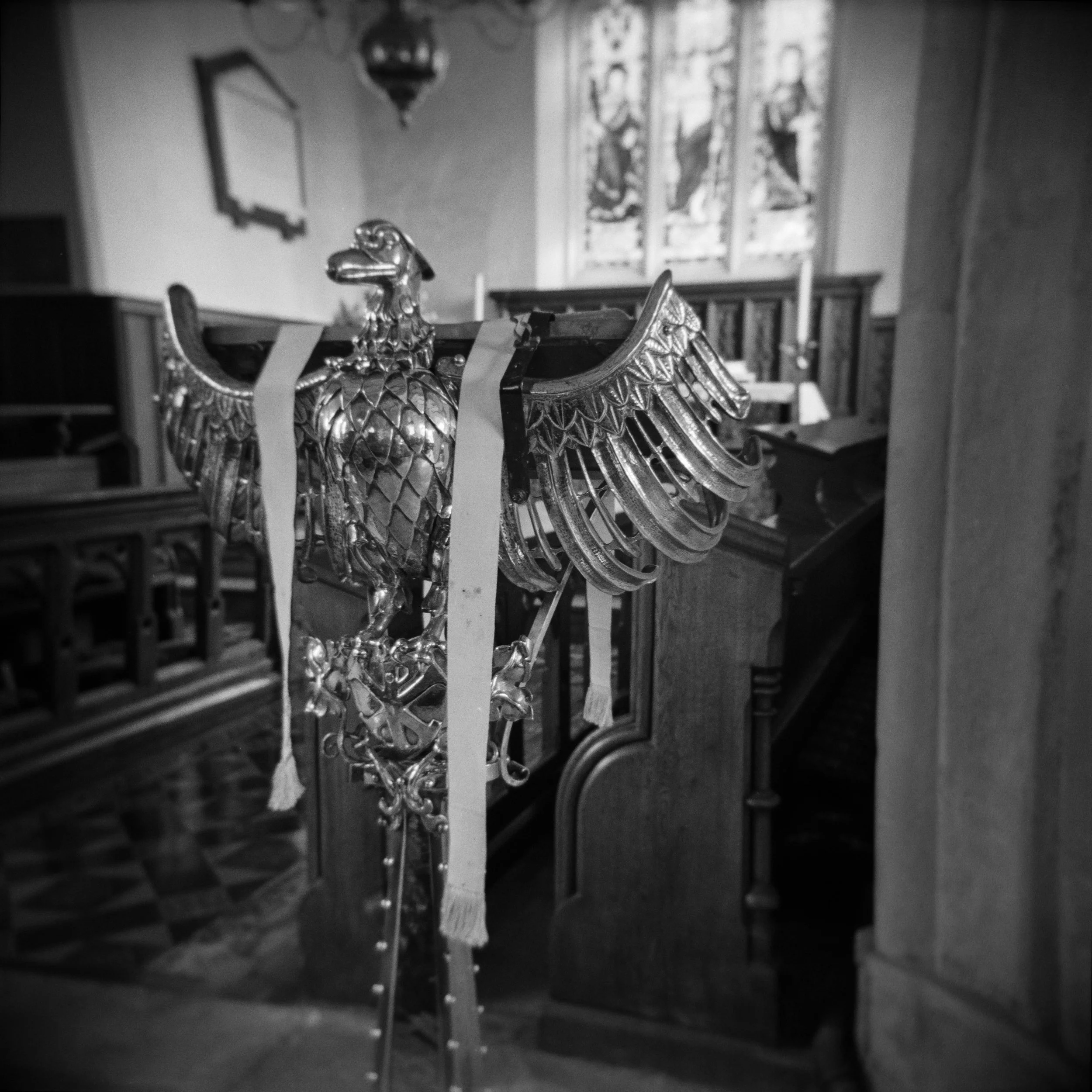
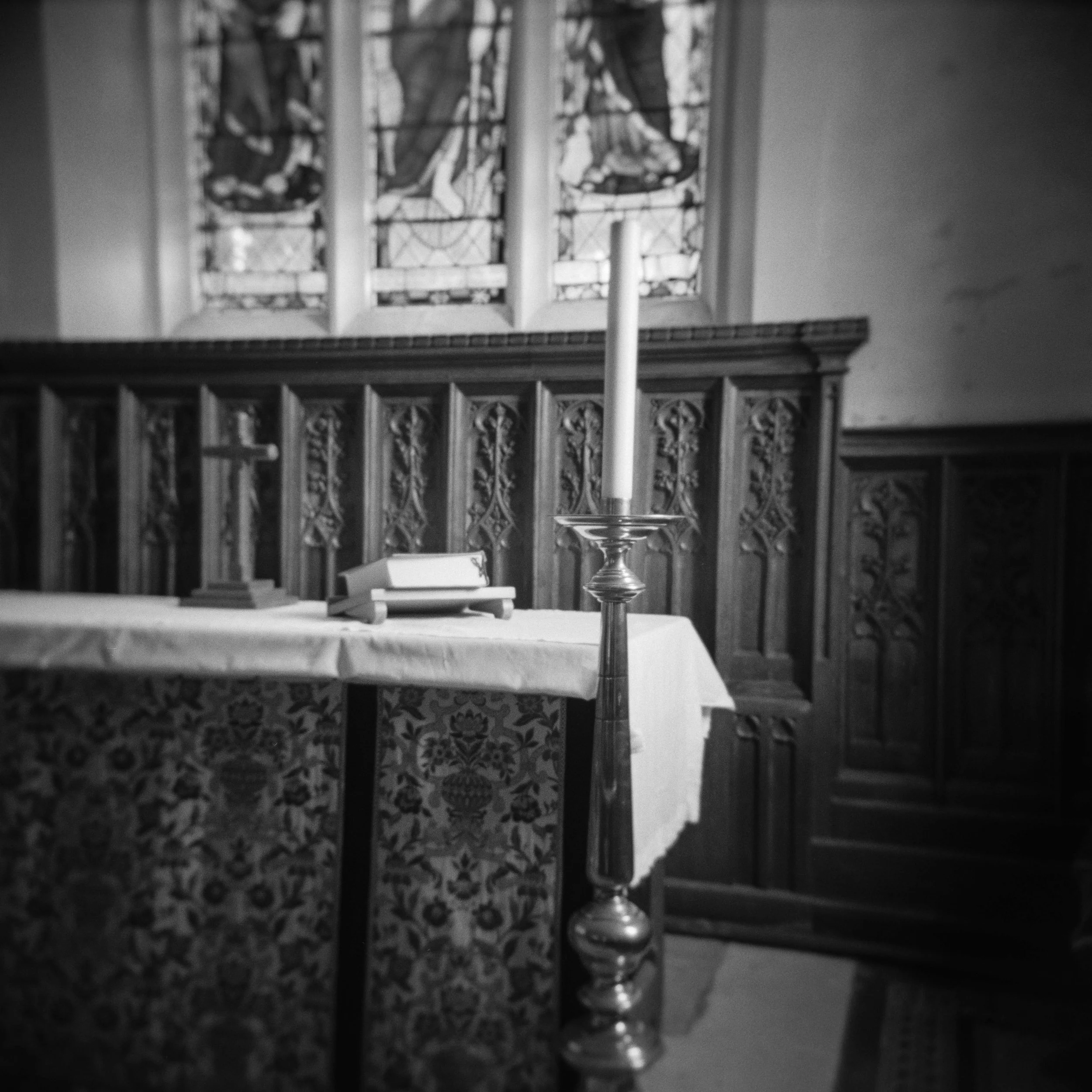
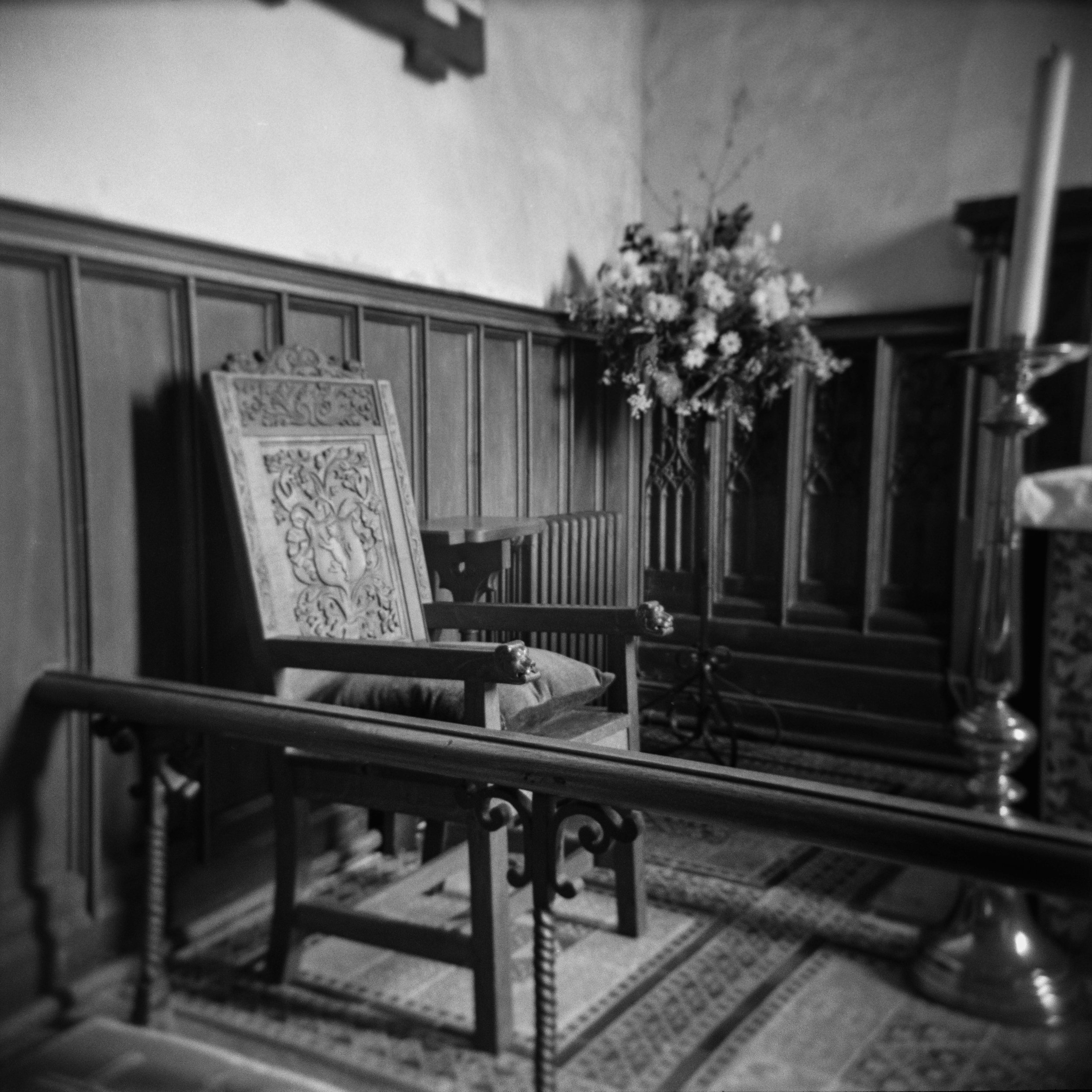
Back in February I had a work trip to Somerset and decided to go old school with my camera equipment, taking just a Holga and a pinhole camera with me. One morning I stopped off at St Andrew’s Church in the village of Old Cleeve and decided to use the Holga to capture a collection of images here.

The Holga has an interesting look. The centre of the lens is surprisingly crisp, but the sharpness towards edges of each frame falls off quite quickly, creating a beautiful, dreamy effect. I’ve never used the camera in a church setting before (at least not indoors), so I wasn’t sure quite how well it would work. I mounted the Holga on my tripod but then realised I’d forgotten to bring my shutter release cable. Ah well, so be it - I just needed to do it the old fashioned way, using my finger on the shutter button, but taking care to keep really still and not jog the camera mid-exposure!

A selection of smaller vignettes from around the church - click on the images to see them enlarged.
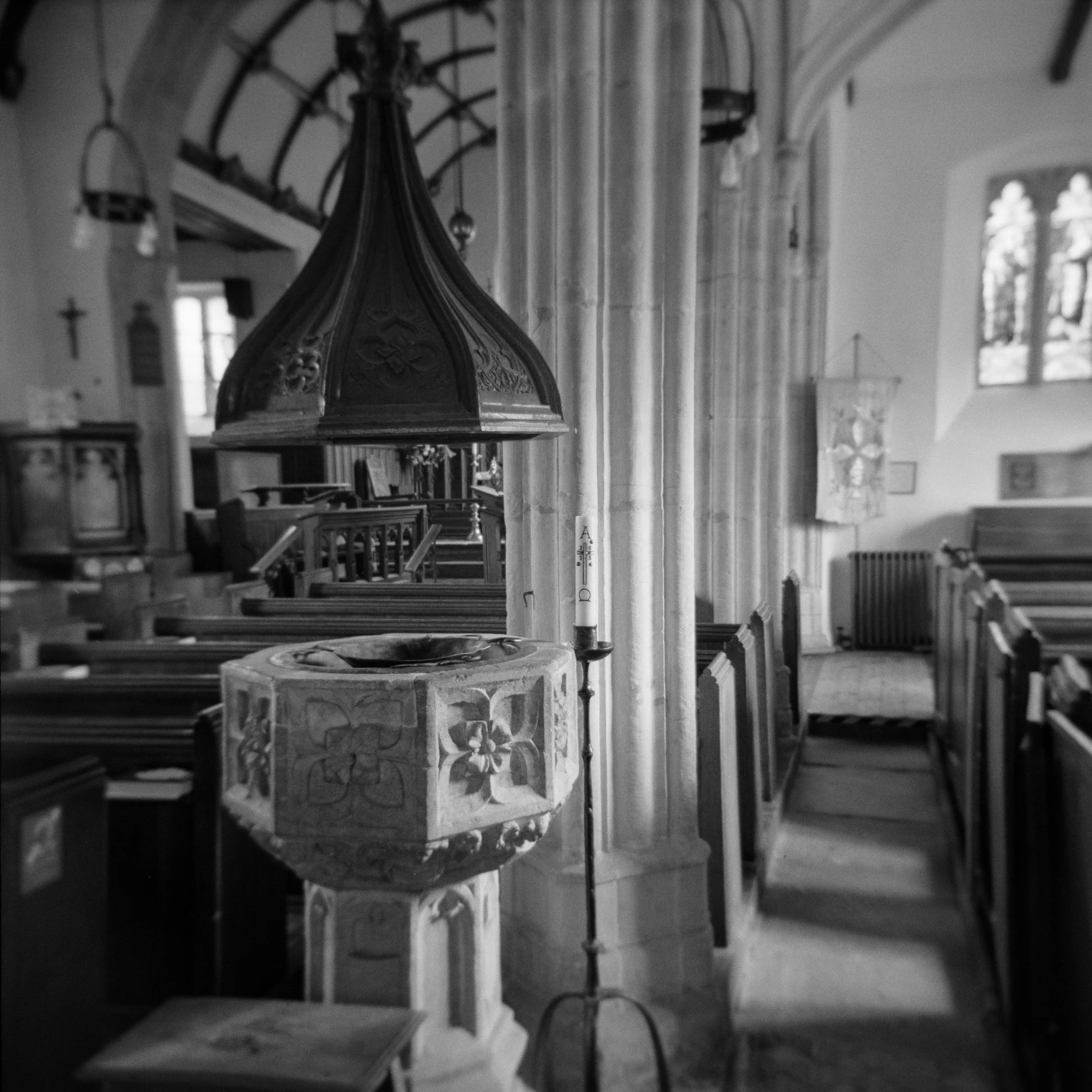
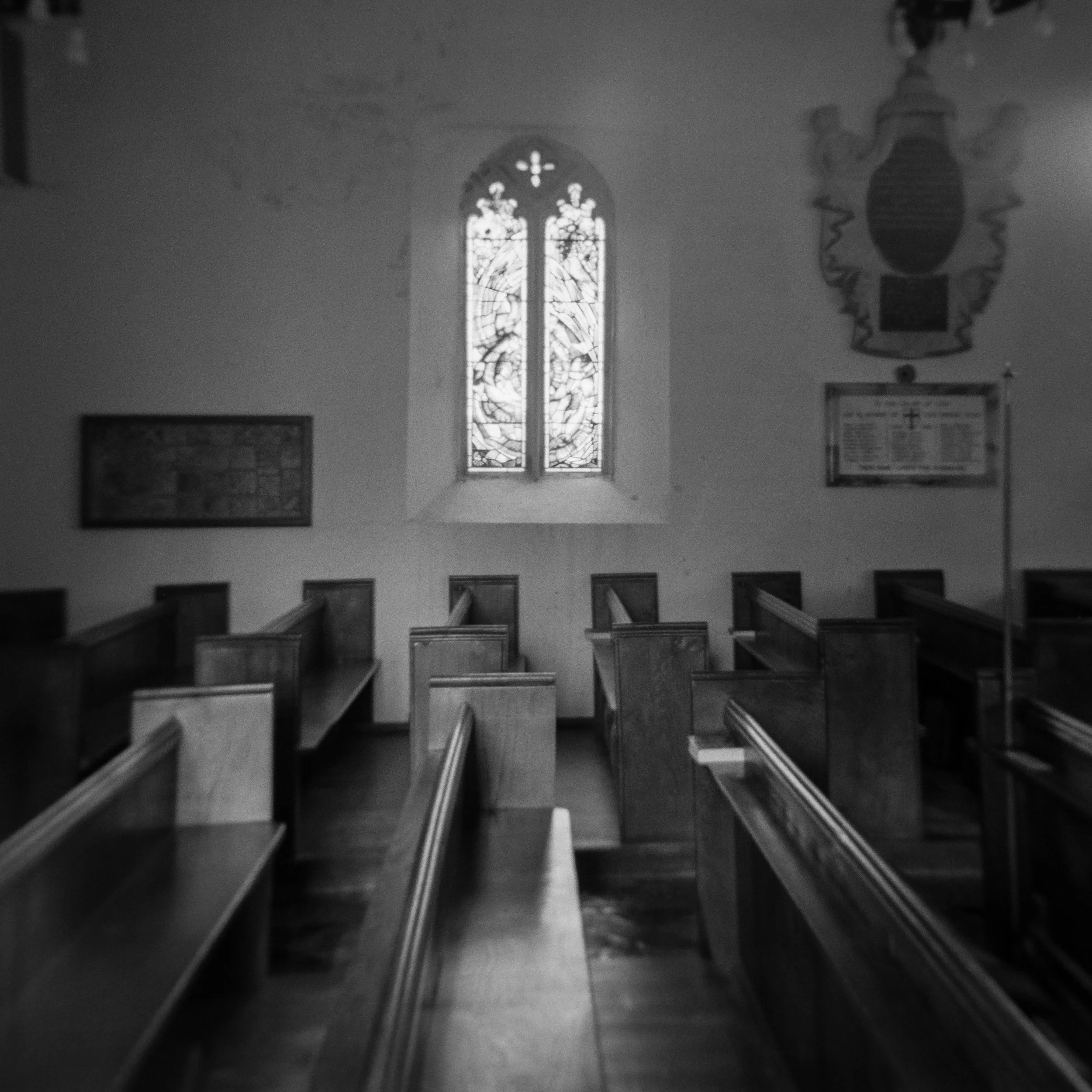
I love the soft light inside an old church like St Andrew’s - so atmospheric. Towards the end of my visit the sun finally came out and illuminated the end of the choir stalls.
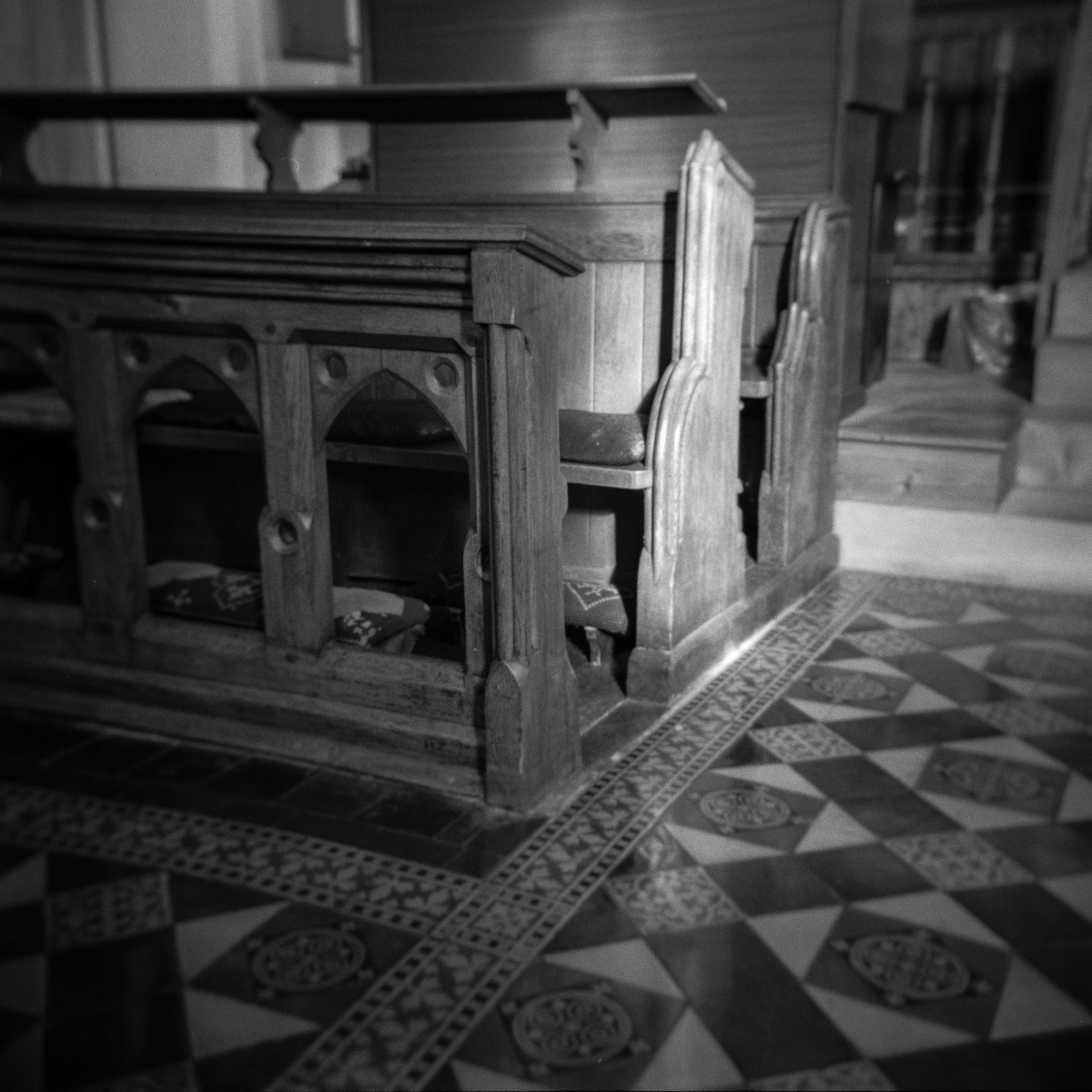
Close focussing isn’t a particular strength of the Holga, but I was lucky enough to judge my distance just right for these ornately carved characters on the ends of the pews.

Overall, I was delighted with the results from my lo-fi photoshoot at St Andrew’s - definitely a worthwhile experiment and one I’ll try again sometime. I guess it just goes to show that expensive gear isn’t always necessary - a £21 eBay bargain can sometimes do the job just as well!

Photos taken February 2026

Low tech London

I’ve long since known that I work best as a photographer when I give myself some photographic restrictions. That might be working with a single prime lens, or sometimes even shooting with a camera which is really simple. During a recent visit to London I went very low tech, taking just my Holga 120 camera and my 6x6 format pinhole camera along.

For a cheap camera (mine cost me a princely £21 on eBay) the Holga’s plastic lens is remarkably sharp, but it has a very characterful look, with a distinctive softening around the edges. The viewfinder offers an approximation of what’ll appear in the finished photo - a quirk I’m still getting to understand better, as you can see in my photo below.

I wonder who visits a park with benches but takes along their own seat?!

A trio of photos from around BBC New Broadcasting House.

A little multiple exposure fun around the Post Office Tower.

And finally, one pinhole photo from the courtyard outside New Broadcasting House.

Photos taken April 2023

Low tech photography

As you know, I’m a fan of simple cameras - after all my pinhole cameras are about as simple as it gets! A couple of weeks ago I decided to use a different sort of machine, but almost as basic, when I made a couple of journeys west. My Holga camera is made of plastic (including the lens) and cost me the princely sum of £21 from eBay - undoubtedly one of my best photographic bargains! It has a single shutter speed and a fixed lens so the only setting you have to remember to adjust is the focus distance, although occasionally I forget to do that!

Holga photos have a recognisable look. If you get the focusing right the simple lens is remarkably sharp in the centre, but this clarity drops off at the edges, creating a dreamy effect. This simplicity makes you think about your compositions but it also brings the ability to make multiple exposures. During my wait at Paddington Station I had a play with this, creating multiple layers with the station’s architectural lines.

A few days later I found myself travelling through London again, with some time to kill before my train home from Liverpool Street. As I walked out of the tube station the sun emerged so I took a stroll with my Holga, seeking out interesting combinations of lines and light.

A shaft of sunlight on the pavement

Photos taken February 2023

Developing my skill set

One of my resolutions for 2022 was to spend money on education rather than more camera gear - a plan I’ve more or less adhered to! One of my educational outings was a two day workshop with Andrew Bartram, doing some pinhole photography and learning to develop my own film. I’ve written about the workshop and what I learnt over on my Inspiration and Education page but I thought I’d share the resulting images from the day in a post here.

Alongside my pinhole camera I took a Holga 120N, which I’d recently bought for the princely sum of £21 on eBay. This simple plastic camera has just two apertures and one shutter speed (1/100 of a second) and a basic zone focusing system but it’s capable of surprisingly sharp and characterful images. Even better, it weighs almost nothing which is a joy compared to some of my digital gear!

I had some fun with my little Ondu 6x6 too, especially at the decaying house Andrew took me to. I’ll definitely be coming back to spend some more time here when I get a chance as I think this old structure has lots more to offer.

Many years ago I heard Charlie Waite say during a talk that every landscape photographer goes through a ‘shed’ period, photographing barns and sheds in the countryside. The Cambridgeshire Fens offered plenty of opportunities for me to follow his example!

Photos taken on 4th April 2022